
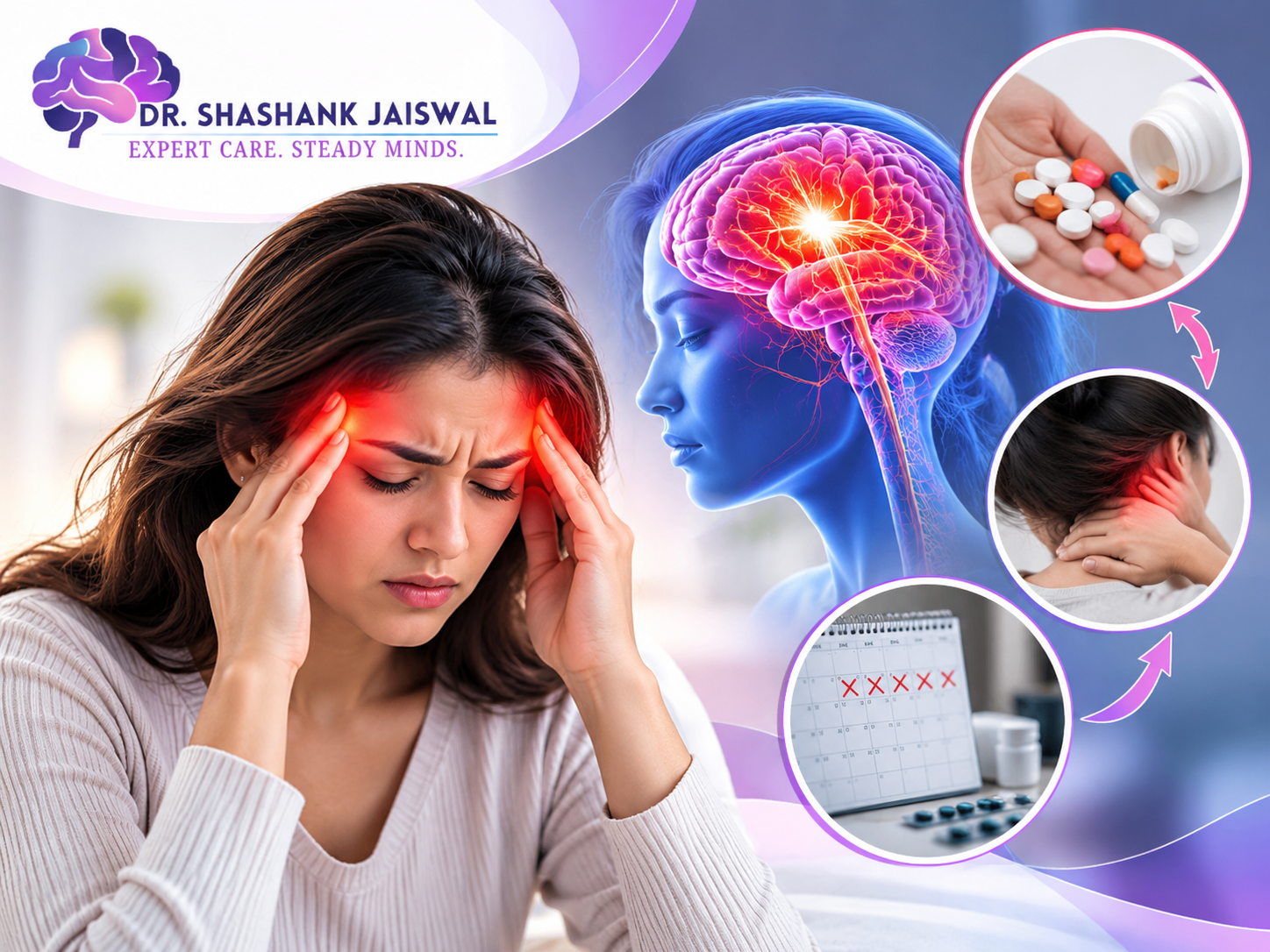
Rebound Headaches: When the Cure Becomes the Cause
Rebound headache causes: Here’s the paradox that trips up a lot of people: you take a painkiller because your head hurts, and somewhere along the way, the painkiller itself starts manufacturing the headaches it was supposed to fix. That’s a rebound headache — more formally called a medication overuse headache — and it’s one of the few conditions in medicine where the treatment and the disease become the same thing. Rebound headaches are more common than most people assume, showing up in roughly 1 to 2 out of every 100 people in a given year, almost always in someone who already had migraine or another primary headache disorder to begin with.
Quick self-check: Rebound headache is worth discussing with a doctor if —
- You’re taking headache medication more than 2-3 days a week, on a fairly routine basis
- Your headaches now show up on most days, sometimes waking you up in the morning
- The pain eases once you take your usual medicine, but creeps back as soon as it wears off
- Your medication doesn’t seem to work as well as it used to, so you’ve started taking more of it, more often
If that sounds familiar, the medicine that’s supposed to be helping may actually be the thing keeping the cycle going.
Rebound Headache Causes
Why a Painkiller Starts Causing Pain
Nobody has fully nailed down the exact mechanism — Mayo Clinic is upfront that experts don’t completely understand why this happens — but the leading theory involves the nervous system’s own pain-processing circuitry getting rewired by repeated exposure to the drug. The receptors and pathways that normally dial pain signals up and down seem to become less responsive over time, and as the medication’s effect fades between doses, the brain essentially overcorrects, generating a new headache to replace the one that just went away. It’s a cycle that feeds itself: more headaches lead to more medication, which leads to more headaches.
Crucially, this isn’t just a matter of “too much medicine, generally.” It only tends to happen in people who already have a primary headache condition, most often migraine. Someone taking the same painkiller regularly for, say, chronic back pain, without a headache disorder underneath it, generally doesn’t develop this pattern.
Not All Medications Carry the Same Risk
Reflect for a moment: Do you know which of your own medications falls into the higher-risk category below — or have you been treating them all as equally safe to take as needed?
The frequency threshold that triggers rebound headaches actually varies quite a bit by drug class:
- Simple over-the-counter pain relievers (acetaminophen, ibuprofen, naproxen) carry the lowest risk, but it climbs once you’re using them more than about 15 days a month for three months or longer
- Combination painkillers containing caffeine, aspirin, and acetaminophen sit in moderate-risk territory
- Butalbital-containing prescription combinations, opioids, and triptans are considered high-risk, and the threshold drops to roughly 10 or more days a month
- Ergotamines appear to carry somewhat lower risk than triptans, though they’re still implicated
- Newer gepant medications (like ubrogepant and rimegepant) are not currently thought to cause rebound headaches at all — a genuinely useful distinction if you’re comparing options with your doctor
Who Tends to Get Caught in This Cycle
Certain patterns show up again and again in the research: it’s more common in women, particularly between ages 30 and 50, and in people who already deal with chronic pain, depression, anxiety, or high caffeine intake (over roughly 200 mg a day — about two cups of coffee). A personal or family history of substance use disorder also raises the risk, which is part of why doctors treat the withdrawal process with real caution rather than just telling someone to quit cold turkey.
Breaking the Cycle — Without Making It Worse
The single most important step is also the hardest to hear: stopping the overused medication completely, since treatment doesn’t work unless that happens fully. But how that happens matters enormously, and it’s not a one-size-fits-all instruction.
For simple pain relievers, most clinicians will have you stop relatively abruptly. For opioids and barbiturate-containing drugs like butalbital, though, the approach is different — these typically need to be tapered down gradually under medical supervision, because stopping butalbital abruptly after long-term use can actually trigger seizures in some people. This is exactly why self-directed quitting isn’t the move here; a doctor needs to be involved in deciding the pace.
Expect headaches to get worse before they get better — withdrawal symptoms like nervousness, restlessness, nausea, insomnia, and constipation are common and typically last anywhere from a few days to a couple of weeks. To get through that stretch, doctors often use “bridge therapies” — short-term treatments with a different mechanism than the overused drug, such as NSAIDs, corticosteroids, nerve blocks, or anti-nausea medication — specifically so the transition doesn’t feel unbearable. In some cases involving high-dose opioids, butalbital, or significant underlying anxiety or depression, a brief hospital stay is recommended to manage withdrawal safely.
Alongside the withdrawal itself, doctors usually start a daily preventive medication aimed at the underlying headache disorder — options include topiramate, certain antidepressants, beta blockers, calcium channel blockers, CGRP monoclonal antibodies, or Botox injections for people with chronic migraine. Cognitive behavioral therapy, biofeedback, and relaxation training round out the non-drug side of treatment, particularly when anxiety or depression is part of the picture.
The encouraging part: most people see real improvement within about two months, with more severe or long-standing cases taking up to six. Relapse is possible, which is exactly why ongoing prevention — not just getting through the withdrawal — is part of the plan.
The Bottom Line
Rebound headaches are a reminder that more medicine isn’t always more relief — past a certain frequency, it can start working against you. The good news is that the condition is both treatable and largely preventable: the general rule of thumb worth remembering is to keep as-needed headache medication under 2-3 days a week, and to flag it with a doctor if you’re reaching for it more often than that, or having headaches on more than 4 days a month, since that’s often the point where a preventive medication makes more sense than another round of pain relievers.
One question worth asking your doctor: Based on how often I’m actually taking this medication, am I at risk of rebound headaches — and would a preventive approach serve me better than treating each headache as it comes?
