
Alzheimer’s Disease: A Complete, User-Friendly Guide
Alzheimer’s disease is one of the most talked-about neurological conditions in the world—and for good reason. It is a leading cause of dementia, affecting millions of individuals and families globally. Understanding this condition empowers you to recognize early signs, seek timely support, and engage in proactive care.
What Is Alzheimer’s Disease?
Alzheimer’s disease is a progressive brain disorder that impairs memory, thinking, and behavior. It is the most common form of dementia—a group of brain disorders that cause long-term and often gradual decline in cognitive function. Unlike normal age-related memory changes, Alzheimer’s significantly interferes with daily life and independence.
Why It Happens: The Underlying Biology
In Alzheimer’s disease, abnormal protein deposits build up in the brain:
- Amyloid plaques: Clusters of protein fragments that accumulate between nerve cells
- Neurofibrillary tangles: Twisted strands of tau protein inside brain cells
These changes damage brain cells (neurons) and disrupt communication pathways. Over time, neurons die, leading to brain shrinkage and progressive cognitive decline.
Who Is Affected? Risk Factors
Although anyone can develop Alzheimer’s, several factors increase risk:
Age
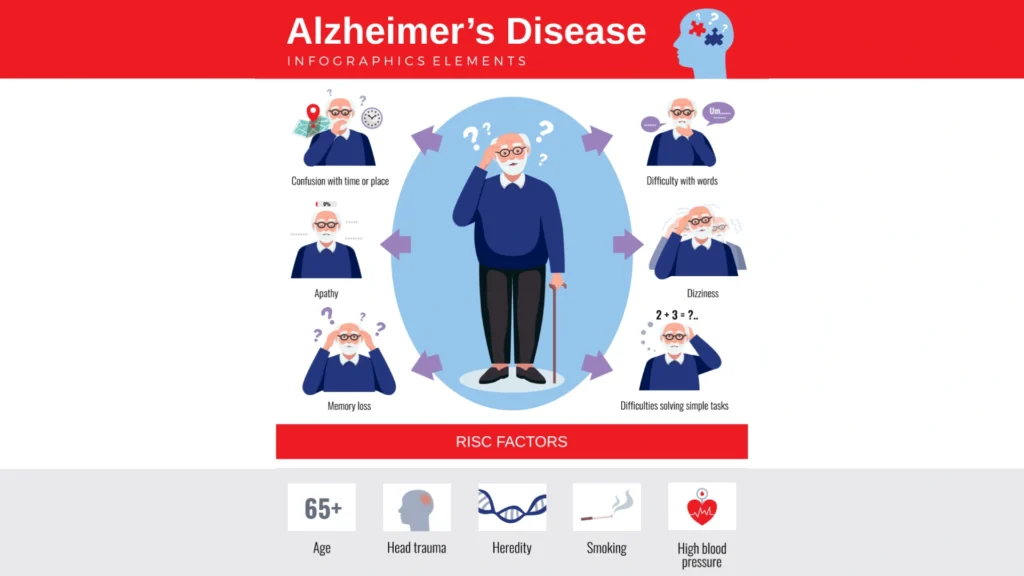
Age is the strongest known risk factor. Most diagnoses occur after age 65, and risk increases with advancing age.
Family History & Genetics
Individuals with a parent or sibling with Alzheimer’s are at higher risk. Certain genetic variations (APOE ε4 gene) influence susceptibility, but genes are not the only factor.
Lifestyle & Vascular Health
Heart disease, high blood pressure, diabetes, smoking, and lack of physical activity may contribute to brain changes linked to Alzheimer’s.
How Alzheimer’s Disease Progresses
Alzheimer’s doesn’t develop overnight. It follows a continuum:
1. Preclinical Phase
Changes begin in the brain years before symptoms appear. Individuals may seem unaffected.
2. Mild Cognitive Impairment (MCI)
Slight memory or thinking problems that don’t yet interfere with daily life. Not everyone with MCI develops Alzheimer’s, but they are at higher risk.
3. Alzheimer’s Dementia
Symptoms become noticeable and start to affect daily activities. Memory lapses evolve into problems with judgment, language, and reasoning.
These stages can span many years and vary among individuals.
Recognizing Symptoms: What to Watch For
Alzheimer’s signs can be subtle at first and gradually worsen. Common symptoms include:
- Memory loss that disrupts daily life
- Difficulty planning or problem-solving
- Challenges completing familiar tasks
- Confusion with time or place
- Trouble understanding visual images
- New problems with words in speaking or writing
- Withdrawal from work or social activities
These symptoms typically worsen over time and span cognitive, functional, and behavioral domains.
Diagnosis: How Alzheimer’s Is Identified
No single test confirms Alzheimer’s. Diagnosis typically involves:
- Medical history and symptom evaluation
- Cognitive and memory testing
- Neurological examinations
- Blood tests to rule out other causes
- Brain imaging (MRI/CT) to detect structural changes
Doctors aim to exclude other conditions like vitamin deficiencies, thyroid problems, or depression, which can mimic dementia symptoms.
Treatment and Management
While there is no cure for Alzheimer’s, treatments help manage symptoms and improve quality of life.
Medications
Some drugs may temporarily help with memory or slow the decline in certain stages. These include cholinesterase inhibitors and NMDA receptor antagonists.
Supportive Interventions
- Cognitive therapy
- Structured routines
- Sensory stimulation activities
- Caregiver support and education
Lifestyle Measures
Although research continues, some evidence suggests that physical exercise, a healthy diet, mental stimulation, and social engagement may support brain health and reduce risk factors.
Living with Alzheimer’s: Practical Tips
For Individuals
- Use memory aids (lists, calendars)
- Keep a structured daily routine
- Maintain safe, simplified environments
For Caregivers
- Seek education and training
- Establish clear communication strategies
- Advocate for regular medical follow-up
- Build emotional support networks
Alzheimer’s affects the entire support system, not just the individual diagnosed.
When to Seek Professional Evaluation
If you or a loved one experiences persistent memory loss, confusion, or changes in daily functioning, a medical evaluation is recommended. Early detection enables better planning, treatment options, and support resources.
The Future of Alzheimer’s Research
Researchers are exploring:
- Early biomarkers for preclinical diagnosis
- New therapies targeting brain pathology
- Lifestyle and vascular health interventions
- Gene-environment interactions
Advances in understanding Alzheimer’s promise more effective prevention and treatment strategies in the years ahead.
Bottom Line
Alzheimer’s disease is a progressive neurological condition that affects memory, thinking, and daily functioning. Although it cannot currently be cured, early recognition, medical management, therapeutic support, and healthy lifestyle habits can significantly enhance quality of life. Understanding the disease equips individuals and families to navigate challenges with resilience and informed care.